Carolyn Bessette: The Love Story We Can’t Let Go
Updated: Aug 24

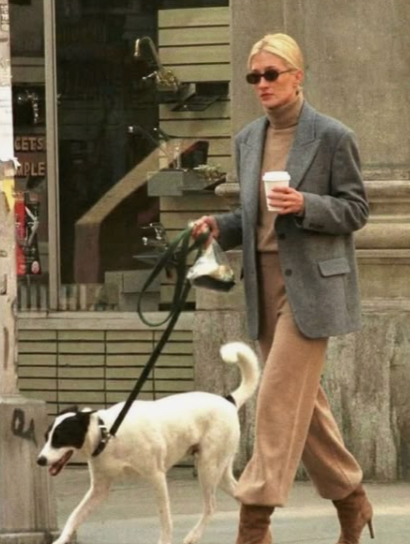


Did we as a society move on too quickly from the Love Story series, or is it just me? The thought crossed my mind as I was scrolling through my phone and stumbled upon a video of Carolyn Bessette: before she was a Kennedy. Before the headlines, the photographs, and the public fascination, she was simply Carolyn: an enamoring, sharp blonde who just wanted to work in fashion. She was a woman of few words, who only craved the privacy of her relationship. Yet, the spotlight that brought her into the public eye ironically began to obscure the woman behind the name.
Once I saw Love Story, I immediately searched up Carolyn Bassette. For me, she had this kind of effortless cool girl effect that makes people want to know more about her. She was stylish, independent, sophisticated, and had a trait of confidence that only resides in New York. I became obsessed with her ability to meticulously curate every garment, accessory, and detail so carefully that it appeared effortless, yet deeply intentional. In other words, the clothes didn’t wear her; she carried the attitude that made each outfit distinctly her own, turning even the simplest pieces into a statement.


She had an incredible way of mixing high-end designers with simple, everyday pieces that set a new standard for seamless fashion. Many public figures (Hailey Bieber, Kendall Jenner, Bella Hadid) of our time still strive to capture that timeless aura: one rooted not in fast fashion or fleeting trends, but in the enduring appeal of simple, thoughtfully chosen pieces. Her style worked perfectly because it was doable, and she wasn't afraid to embrace a bare face look ever.

The Calvin Klein Chapter: Carolyn Bessette’s tenacious rise to the pinnacle of Calvin Klein during the 90s was only the beginning of the influence she would have on fashion. Bessette started at Calvin Klein in sales and worked her way up to public relations. She helped operate behind the scenes of runway shows and managed celebrity relationships. While she did not discover Kate Moss, she championed the emerging model’s casting in the brand’s provocative 1992 underwear campaign, partnering closely with art director Fabien Baron. Sensing that there was something extraordinary about Moss beyond her out of the world looks, Bessette and Baron actively convinced Calvin Klein that her distinct presence was exactly what the brand needed. The campaign became a defining moment in Moss’s rise to supermodel status, and Calvin Klein never looked better. The campaign sent a cultural shockwave through the fashion world by featuring Mark Wahlberg and Kate Moss in striking black-and-white advertisements, defining the grunge aesthetic of the 1990s.


Fashion's Minimalist Muse: She was an icon of fashion who embodied the essence of 90s minimalism, favoring neutral and earthy tones that defined the era’s style. Her love for clean lines, muted colors, and quality fabrics set the tone for spring and autumn wardrobes year after year. Today, you’ll see celebrities and influencers embracing her style of sleek turtlenecks, tailored trousers, loafers, dark denim jeans, silk dresses, tiered midi skirts, and linen shirts. She had a versatile collection of clothing that could be dressed up or down. Bessette had an instinctive understanding of the capsule wardrobe, creating an aesthetic that remains just as relevant today as it was then.
Her shoes were often the highlight of her outfits, with Prada and Manolo Blahnik adding a distinctive touch, while designers like Narciso Rodriguez, Jil Sander, and Yohji Yamamoto shaped the rest of her wardrobe. Not a flashy logo or brand was in sight whenever she was photographed.


.

An Introspective Wardrobe: Sadly, some of her most iconic looks come from a heartbreaking perspective of her relationship. According to fashion writer Maureen Callahan, Bessette often wore Yamamoto because the designer did not advertise in George, the magazine John F. Kennedy Jr. founded, allowing her to avoid appearing to favor designers who advertised in the publication (Tashjian). Beyond mere practicality, Yohji Yamamoto’s philosophical design utilized clothing as an armor to grant female wearers autonomy and sovereign control. His clothing profoundly mirrored Carolyn Bessette-Kennedy’s disciplined approach to fashion.
She could not escape the public eye, but through his clothing she could decide exactly how much of herself she revealed.


She always made sure to max out her clothing with delicate accessories, such as timeless Cartier watches she wore almost like uniform, practical headbands crafted from hand-polished acetate that glowed with rich color, and delicate wedding rings featuring sapphires from Tiffany and Co. Most importantly, her signature look always featured a pair of oval sunglasses.
Even without social media in the 90s, Carolyn remained one of the most photographed women of her time. Ultimately, Carolyn Bessette’s influence extends far beyond celebrities, inspiring women like me to adopt a classy style rooted in quiet confidence and individuality.


Comments